
Independent Book Publishing for British Authors Done Properly
Empower your publishing journey with full creative control, 100% royalties, and master-level editorial and design standards tailored for UK authors.
The Self-Publishing Blueprint
A clear, honest roadmap designed to protect your royalties and transform your manuscript into a commercially viable masterpiece.
Honest assessment of your draft to determine necessary editing depth and design requirements.
Handcrafted interior typesetting, bespoke cover design, and complete digital conversion.
Setting up your personal publisher accounts so platforms pay earnings directly into your bank.
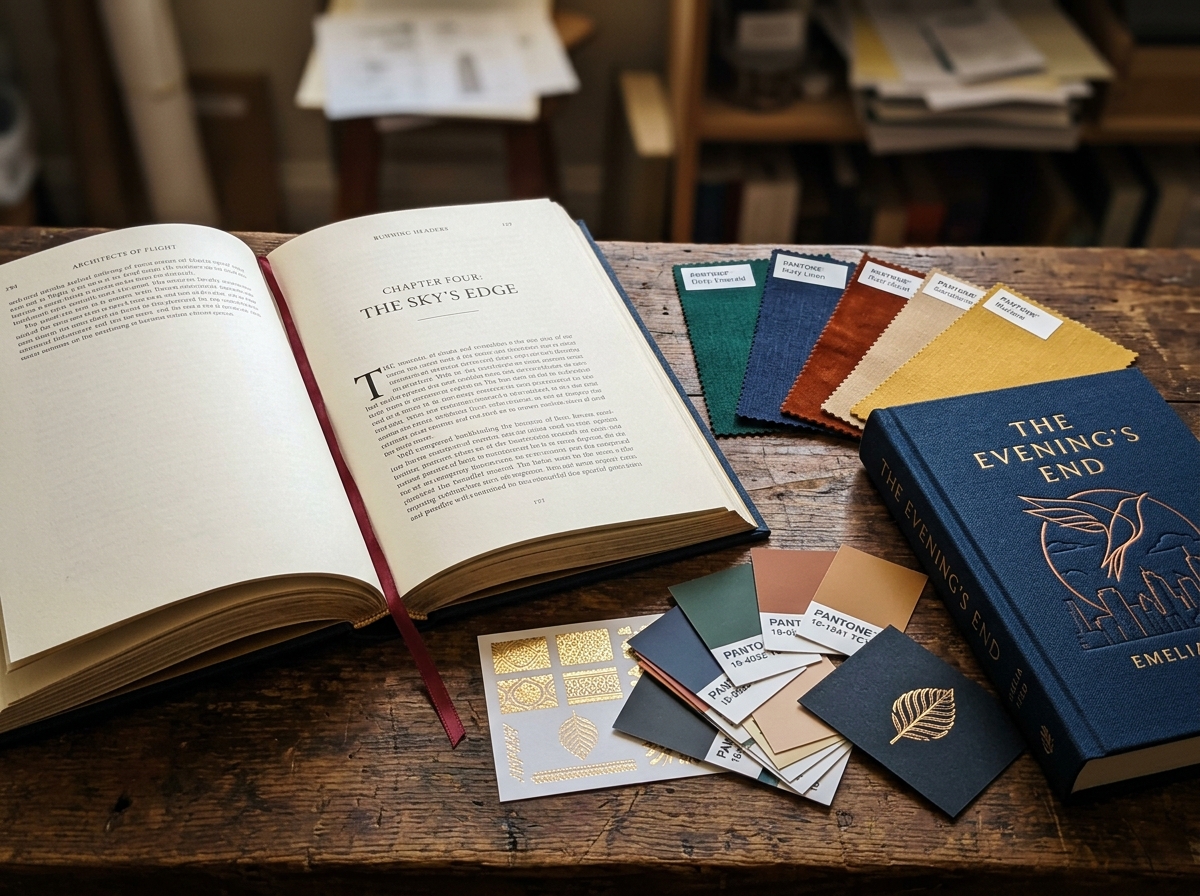
From editorial refinement to volume distribution readiness.
Self-Publishing Platforms & Options
Compare the leading self-publishing avenues to choose the right commercial path.
Maximize Kindle Unlimited page reads and access exclusive promotional tools with KDP Select 90-day enrolment.
Distribute simultaneously to Apple Books, Kobo, Barnes & Noble, and international platforms without exclusivity restrictions.
Zero inventory overhead. Books are printed and dispatched on demand whenever a reader orders.
Place your title within OverDrive, Baker & Taylor, and international public and university library networks.
Technical Precision & Direct Earnings
No middleman taking a percentage of your royalties — everything is built to your direct ownership.
We establish and configure accounts directly under your name, ensuring 100% of royalties are deposited into your bank without intermediary fees.
- checkDirect Amazon / Ingram bank transfer
- checkReal-time sales dashboard access
- checkZero royalty deduction or cuts
You own your manuscript, your cover artwork, and your final formatted layout files in perpetuity.
- checkFull intellectual property retention
- checkRe-publish or adapt anywhere anytime
- checkZero restrictive contractual ties
Every book cover and interior layout is created from scratch by British designers — never mass-produced templates.
- checkGenre-specific cover composition
- checkFull wrap for print spine calculation
- checkeBook thumbnail conversion
Your Path to Independence
Step-by-step milestone delivery keeping you fully informed at every stage.
Defining your publishing goals, target audience, and royalty preferences.
Crafting custom typography and shelf-ready cover artwork.
Reviewing PDF proofs and EPUB preview files for author approval.
Uploading to your retailer accounts and verifying global availability.
Self Publishing in UK: Professional Support to Bring Your Book to Market
Self publishing gives authors the freedom to bring their books to market while retaining control over important creative and commercial decisions. Rather than transferring the entire process to a traditional publishing house, writers can select the services they need, work with publishing specialists and decide how their books reach readers.
For authors considering Self Publishing in UK, preparing a manuscript is only one part of the journey. Decisions about ISBNs, publisher identity, distribution, pricing, copyright, printing and marketing all influence how a book is produced and presented. Understanding these responsibilities early helps authors establish a publishing plan that reflects their goals and available resources.
Independent publishing can suit first-time writers, established authors, professionals, researchers, businesses and individuals who want to share personal experiences. Whether you are preparing a novel, memoir, poetry collection, specialist guide or educational resource, your project deserves a publishing approach that considers its content, audience and production requirements.
Working with a professional publishing provider allows you to retain creative ownership while receiving assistance with specialist tasks. The right support can be arranged around your manuscript, publishing experience, preferred formats and distribution objectives.
Self publishing involves a series of connected decisions rather than a single submission. Authors first need to establish what they want to publish, identify the work required to prepare the manuscript and decide how the completed book will reach its intended readers.
A typical independent publishing journey includes the following stages:
The first step is reviewing the manuscript to understand its current condition. A completed draft may require developmental editing, copyediting, proofreading or a final technical review. An initial assessment helps identify the work needed before the book moves into production.
Authors establish the intended readership, publication format, commercial objectives and distribution preferences. This stage also helps determine whether the project needs a paperback, hardback, ebook or a combination of editions.
The manuscript is refined and prepared for publication. Depending on the project, this stage may involve editing, proofreading, cover design, interior layout, typesetting and digital conversion.
Authors consider the appropriate ISBN arrangements, publisher details, book information and retailer requirements. These details should remain consistent across the editions and platforms where the book will be available.
The completed files are submitted through selected publishing platforms or distribution services. Authors should understand which retailers and territories are covered and how readers will be able to purchase or order the book.
Once the book becomes available, authors can monitor sales information, review product listings, plan promotional activity and arrange corrections or updates when required.
The process varies according to the publication and the services selected. A straightforward ebook may require fewer production stages than an illustrated hardback or a title intended for both online retail and physical bookshops. Professional UK Self Publishing Services can help authors understand these requirements and organise the work involved.
Authors often compare independent and traditional publishing before deciding how to release their work. Both routes can provide access to readers, but they involve different arrangements for creative control, investment, production and commercial responsibilities.
Traditional publishing generally involves submitting a manuscript to a publishing house or literary agent. If a publisher accepts the work, the publishing agreement explains which rights are being licensed, what the publisher is responsible for and how the author's financial arrangements will work. The publisher normally manages the production and distribution activities covered by the agreement.
Independent publishing gives authors greater involvement in selecting production services and publishing platforms. They can decide which specialists to appoint, which editions to produce and how to approach distribution. This flexibility also means authors must understand decisions that a traditional publisher would normally manage.
The choice is not simply between paying for a book and publishing without assistance. Authors can manage every stage independently, outsource selected tasks or appoint a company to coordinate several parts of the process.
A professional UK Self Publisher should explain these arrangements clearly. Authors need to understand which responsibilities remain theirs, which tasks are included in the service and what rights or permissions are involved. This makes it easier to compare providers according to the work they actually deliver.
An International Standard Book Number, commonly known as an ISBN, identifies a particular book edition and format. It helps booksellers, libraries, wholesalers and other organisations distinguish one publication from another.
A paperback and an ebook are separate formats and may require separate ISBNs when ISBNs are used. A new edition containing significant changes may also need a different identifier. Authors should check the relevant ISBN agency and retailer requirements before assigning numbers to their publications.
An ISBN does not automatically provide distribution, copyright protection or access to bookshops. It is an identification number, not a guarantee that retailers will stock or order a title.
Authors should also understand the publisher information associated with their ISBN. Depending on the registration arrangement, the publisher name recorded against a book may be the author's own publishing imprint or the organisation that supplied the ISBN. This information can influence how the publication appears in bibliographic records and retailer systems.
When considering UK Self Publishing Services, ask the provider to explain:
- Whether an ISBN is included or needs to be purchased separately.
- Which publisher name will be associated with the number.
- Whether separate editions require additional ISBNs.
- Who is responsible for registering the book's bibliographic information.
- Whether the author can use an independently registered ISBN.
- What happens to publishing records if the author changes service providers.
These details are particularly important for writers who want to build a long-term catalogue under their own publishing identity.
Independent authors can choose between print-on-demand production and ordering a quantity of books in advance. The right option depends on expected demand, available funds, storage arrangements and the intended sales channels.
Print-on-demand, often shortened to POD, allows a copy to be produced when a customer places an order. This reduces the need to purchase and store a large quantity of books before publication.
It can be a practical option for first-time authors, specialist publications and books with uncertain demand. Authors can make a title available through compatible retail channels without maintaining their own stock.
However, print-on-demand involves production costs that affect the amount remaining from each sale. Paper specifications, page count, colour printing, binding and distribution arrangements can influence the final cost. Authors should review the available print options and calculate whether their chosen retail price leaves an acceptable margin.
A short print run may suit authors who need copies for events, direct sales, professional use or a planned launch. Ordering several copies together can offer a different unit cost from producing each book individually.
Bulk printing requires more planning. Authors need to consider how many copies they can reasonably sell, available storage space, delivery arrangements and the possibility of unsold stock. A lower printing cost per copy does not necessarily make a large order more economical if many books remain unused.
The decision should be based on realistic demand rather than the assumption that a larger print run will automatically produce better returns.
Online retail availability and physical bookshop distribution are not the same. A title can appear on an online retailer's website without being stocked on the shelves of independent bookshops or national chains.
Authors who want to approach bookshops should understand the practical requirements of supplying the book trade. Bookshops generally need reliable ordering information, suitable wholesale terms and a way to obtain copies when customers request them.
Several factors influence whether a self-published title is suitable for bookshop supply:
- ISBN and bibliographic information: Accurate book details help trade customers identify the correct edition.
- Wholesale discount: Retailers need commercial terms that allow them to sell the book at a viable margin.
- Returns arrangements: Some trade channels operate with returns conditions, which authors should understand before accepting them.
- Stock availability: Bookshops need to know how copies can be ordered and how quickly they can be supplied.
- Distribution arrangements: A distributor or wholesaler may manage orders and fulfilment, depending on the route selected.
- Professional presentation: An appropriate cover, readable interior and accurate product information help the book meet reader expectations.
Authors who plan to sell directly to local bookshops may need to manage enquiries, invoices, stock and delivery themselves. Others may prefer a distribution arrangement that handles some of these responsibilities. The available options and commercial terms should be reviewed before publication.
Copyright is an important part of independent publishing. Authors generally retain copyright in their original work, but they may grant specific permissions to service providers, retailers, distributors or other organisations so that agreed publishing activities can take place.
The wording of an agreement matters. A service provider may need permission to edit, reproduce, format, upload or distribute a book. These permissions should relate to the work required and be explained clearly before the author agrees to the arrangement.
Authors should review the following points before signing an agreement:
- Ownership of the manuscript: Confirm who owns the original written work and any pre-existing material.
- Cover and interior artwork: Establish whether the author receives ownership, a licence or specified usage rights for commissioned design work. Third-party fonts, stock images and illustrations may have separate terms.
- Distribution permissions: Check which platforms and territories are covered, whether the arrangement is exclusive and how permission can be withdrawn.
- Retailer accounts: Understand whether accounts are registered in the author's name and who controls access to sales reports and payment information.
- Payment arrangements: Review service fees, additional charges, royalty calculations and payment responsibilities.
- Termination and file access: Confirm how the relationship can end and whether the author will receive the final production files needed to continue publishing independently.
An agreement should be understandable before an author signs it. Where rights, exclusivity or royalty terms are unclear, independent legal advice may help clarify their implications.
The cost of self publishing depends on the manuscript and the level of professional assistance required. A writer who already has an edited manuscript and a completed cover may need only technical preparation. Another author may require extensive editorial work, bespoke design, multiple formats and distribution support.
There is no single price that applies to every book. The total investment can include:
- Developmental editing or structural assessment.
- Copyediting and proofreading.
- Cover design and illustration.
- Interior formatting and typesetting.
- Ebook conversion and technical validation.
- ISBNs and registration where required.
- Printing and proof copies.
- Distribution or fulfilment arrangements.
- Marketing materials and promotional activity.
Authors should compare quotations by examining the services included rather than considering the headline price alone. A basic package may cover only essential production, while a more extensive service may include several specialist stages.
It is also useful to distinguish one-off production costs from ongoing expenses. Printing, advertising, storage, distribution and additional revisions may create costs after the initial publication work has been completed.
Self Publishing Packages can help authors understand which services are grouped together and what level of assistance is available. However, package names alone do not reveal the full scope of the work.
Before selecting an option, examine whether it includes editing, proofreading, original cover design, interior layout, ISBN registration, print production, ebook preparation or distribution. Check the number of revision rounds, the formats supplied and any limits based on manuscript length or image requirements.
Authors should also ask whether optional services can be removed if they are unnecessary. Someone with a professionally edited manuscript may not need another editing package, while an author preparing an illustrated book may require a bespoke production arrangement.
The most suitable option is the one that addresses the actual needs of the publication. When comparing self publishing packages UK providers offer, review the deliverables, rights, payment terms and continuing responsibilities in detail.
Many independent authors choose to publish both print and digital editions. This can make a title accessible to readers who prefer physical books as well as those who read on e-readers, tablets or mobile devices.
The two formats require different preparation. A printed edition uses a fixed page layout, with decisions about margins, trim size, typography, pagination and binding. A reflowable ebook adjusts its text to suit the reader's device and display settings.
Authors should plan these editions together while recognising their separate technical requirements. Cover artwork may need different versions for print and digital retail, while publication information should remain consistent across formats.
A coordinated approach can also help authors manage revised editions. If a manuscript changes, the print and ebook files should be checked to ensure that corrections appear in both versions. Product descriptions and retailer information may also need updating.
Legal deposit is an important responsibility for publishers of books and other publications in the UK. It helps preserve published material for future research and public access.
The legal deposit framework covers print and electronic publications, although the submission process differs according to the format and applicable requirements. The British Library is entitled to receive a copy of qualifying publications, and the other legal deposit libraries have rights to request copies under the relevant arrangements.
Authors should establish who is responsible for meeting these requirements when working with a publishing service. If the author is acting as publisher, the obligation may fall to them. If a service provider is handling the relevant arrangements, the responsibilities should be confirmed in writing.
Legal deposit should not be confused with ISBN registration or retailer distribution. These are separate parts of the publishing process, and completing one does not automatically fulfil the others.
Because requirements can vary by publication type and jurisdiction, authors should consult official legal deposit guidance before release. This is particularly important for electronic publications and titles intended for distribution in different parts of the UK.
Making a book available is only one part of reaching readers. Authors also need to consider how potential buyers will discover the publication and what information will help them decide whether it is relevant to their interests.
Marketing can begin before the release date. Authors may prepare a website, build an email list, identify relevant reading communities, contact suitable organisations and develop a schedule for sharing information about the book.
The most appropriate activities depend on the subject and intended audience. A business book may benefit from professional networks, industry publications and speaking opportunities. A novel may be promoted through genre communities, reader groups, author newsletters and relevant book events. A specialist guide may reach its audience through professional associations or educational networks.
A practical marketing plan can include:
- A clear description of the book and its intended readers.
- Consistent author and book information across online profiles.
- A publication page with accurate purchasing details.
- A schedule for announcements and relevant content.
- Review-copy planning where appropriate.
- Outreach to relevant media, organisations or reading communities.
- Monitoring sales information and reader responses.
Marketing outcomes are not guaranteed. Planning gives the book a clearer route to potential readers and helps authors use their available time and resources more effectively.
Choosing a publishing provider requires more than comparing website claims or package names. Authors should understand the company's role, the services it performs and the arrangements under which the work will be delivered.
A reliable UK Self Publishing Company should explain its production process, identify what is included in the quotation and make rights and payment terms clear. It should also distinguish between services it performs directly and tasks handled by external platforms or distribution partners.
When evaluating UK Self Publishers, authors can consider:
- Whether the provider has experience with the book's genre and format.
- Whether its editorial and production services match the manuscript's requirements.
- What the author receives at the end of each stage.
- Whether the author retains access to retailer accounts and sales information.
- How copyright, design rights and distribution permissions are handled.
- Whether additional charges and optional services are explained.
- What support is available if files need correction after publication.
Authors should be cautious of claims promising guaranteed bestseller status, guaranteed sales or automatic placement in major bookshops. These outcomes depend on factors outside a service provider's direct control.
A suitable self publishing company UK authors choose should provide clear information, realistic expectations and a process that respects the author's work and publishing objectives.
Independent publishing allows writers to make informed decisions about their books while selecting the professional support they need. Some authors manage their publishing accounts and distribution themselves, while others appoint specialists for editorial preparation, design, production or technical submissions.
An Online Self Publishing Agency can provide a convenient way to explore available services, discuss project requirements and coordinate publishing tasks remotely. Authors should check which services are delivered directly, how communication is managed and what files and publishing materials they will receive.
British Self Publishing supports authors through the practical stages of preparing and publishing their books. The available self publishing book services can be considered according to the manuscript's condition, preferred formats and intended publishing route. Authors can select the assistance relevant to their project rather than assuming that every book requires an identical package.
Whether you are preparing your first manuscript or adding another title to an established catalogue, a clear publishing plan helps you understand the work involved before committing to production. Reviewing your manuscript, intended readership, preferred formats and distribution objectives provides a practical starting point.
Authors exploring UK Self Publishing online can begin by discussing their manuscript and identifying the services required. Working with a uk selfpublishing expert can help clarify production stages, publishing responsibilities and the decisions involved in preparing a book for release.
Finding suitable publishing support starts with understanding what your book needs. Some manuscripts require editorial development, while others are ready for cover design, formatting, printing or distribution. Identifying these requirements helps authors choose relevant services and plan the work more effectively.
When you Hire UK Self Publishers, look for transparent service descriptions, clear communication and an agreement that explains ownership, deliverables and costs. Authors should also confirm which publishing decisions remain under their control and how the finished files will be provided.
British Self Publishing works with authors who want practical support throughout their independent publishing journey. Whether you need assistance with one production stage or a broader publishing arrangement, the process can begin with a discussion about your manuscript, audience and publishing goals.
Take the next step towards Self Publishing in UK with a clear understanding of your options. Contact British Self Publishing to discuss your book and explore professional support for preparing it for readers.
The Honest British Studio
We educate authors on avoiding vanity press scams. We charge a fair fixed service fee and never take your copyright or royalties.
-
check
Zero royalty cuts or ongoing hidden fees
Pay once for professional services and keep 100% of your future royalties.
-
check
Direct setup on your own publisher accounts
You retain total control and direct ownership of all sales portals.
-
check
High-touch British editorial consultation
Personalized support from experienced UK publishing professionals.

All distributor royalties and payouts deposit directly into your bank account.
Master the Art of Modern Self-Publishing in the UK
Self-publishing has revolutionized the literary landscape, giving authors direct access to global audiences without waiting for traditional gatekeepers. However, reaching the highest standard of self-publishing requires professional craftsmanship in editing, typography, cover art, and metadata.
At British Self Publisher, we treat independent authors with the respect they deserve. We demystify the technical nuances of Amazon KDP algorithms, IngramSpark cataloging, and Nielsen UK registration, helping you navigate the landscape with complete confidence.
Our commitment to ethical publishing means zero predatory pricing, no high-pressure sales tactics, and complete transparency. We provide the highest tier of production services while ensuring you maintain full ownership of your work.
Join hundreds of British authors who have successfully published their books independently with professional distinction, commercial polish, and complete royalty independence.
Frequently Asked Questions
Everything you need to know about publishing with British Self Publishing, our editorial standards, costs, and rights ownership.
Speak directly with a UK publishing consultant for a clear, obligation-free assessment.
Ask an Editorial Specialist